
- Call: 01206 913 222
- Mail: transport@qcmhealthcare.co.uk

5 Ways To Self-Refer for Mental Health Support in The UK
- MENTAL HEALTH
- Nov 12, 2025
5 Ways To Self-Refer for Mental Health Support in The UK
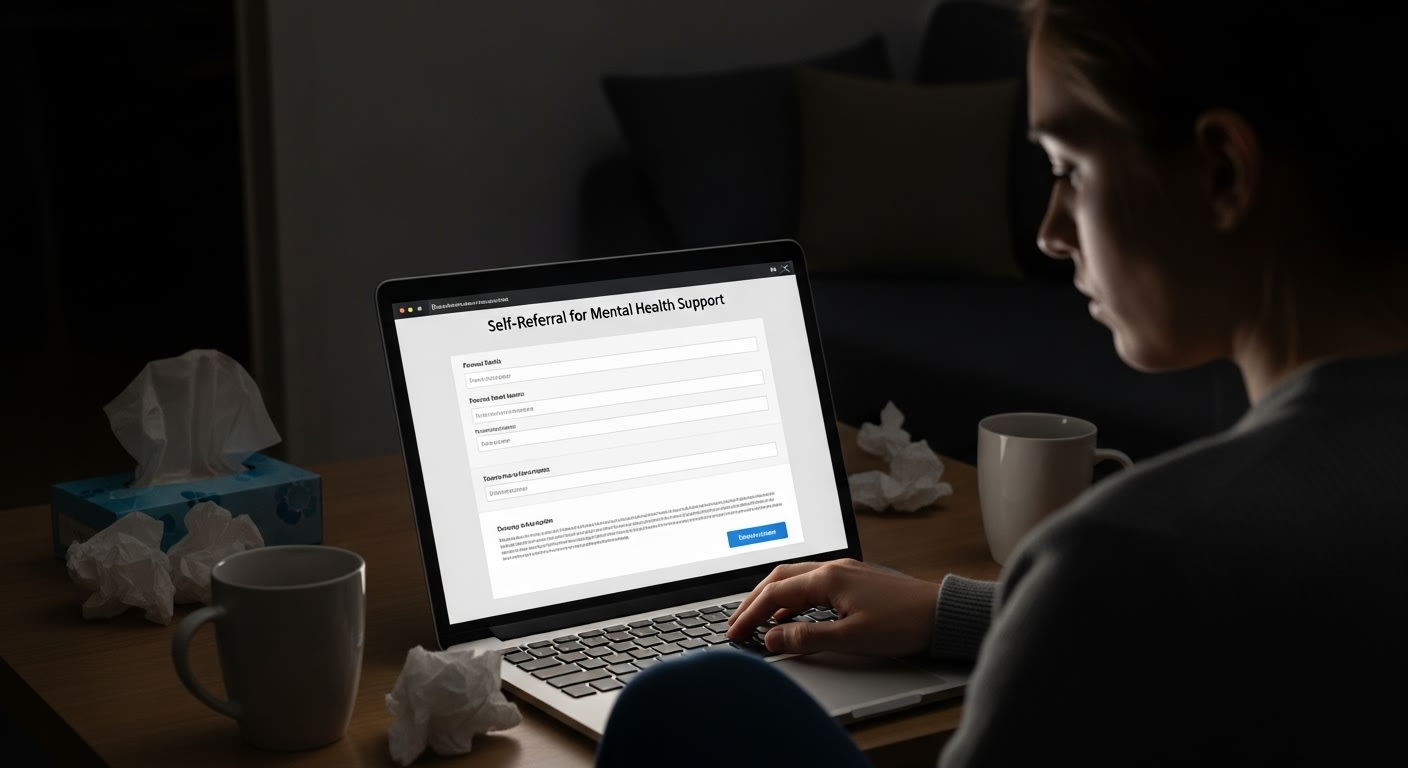
Feeling anxious, stressed, or emotionally drained can make it hard to take the first step toward help. However, knowing how to self-refer for mental health support can give you back control. QCM Healthcare understands that waiting for a GP appointment can delay much-needed care. That’s why self-referral pathways are essential, they allow you to access help directly, confidentially, and at your own pace. Whether you’re struggling with anxiety, depression, or burnout, there are several simple ways to find the right support without waiting for a formal referral.
Understanding Mental Health Self-Referral in the UK
Self-referral means that you can contact a mental health service directly, without needing a GP or medical professional to make the request on your behalf. It’s an empowering step that removes unnecessary delays, ensuring you receive timely emotional and psychological care.
Almost anyone over the age of 16 can self-refer for mental health support in the UK. Whether you’re facing long-term challenges or short-term stress, these services are designed to help you access expert care in the most convenient way possible.
5 Ways To Self-Refer for Mental Health Support in The UK
1.Accessing NHS Talking Therapies Without a GP Referral
2.Reaching Out to Crisis and Listening Services for Immediate Help
3.Using University or College Counselling Services
4.Exploring Digital Self-Help Tools and Email Programmes
5.Considering Private Therapy as a Self-Referral Option
1.Accessing NHS Talking Therapies Without a GP Referral
One of the most common and effective self-referral routes is through NHS Talking Therapies (formerly known as IAPT). This programme is free, confidential, and available to adults across England.
What Conditions Are Covered?
These therapies are designed for people dealing with anxiety, depression, panic disorder, obsessive-compulsive disorder (OCD), or post-traumatic stress disorder (PTSD). You don’t need a clinical diagnosis to apply, just the willingness to improve your wellbeing.
How to Start a Self-Referral
You can start online by visiting the NHS Talking Therapies service finder. Simply enter your GP surgery’s name to locate your local service. In most areas, you can self-refer even if you are not registered with a GP.
What to Expect Next
After submitting your referral, you’ll receive a call or email to arrange an initial assessment. During this session, the therapist will help identify which treatment, such as Cognitive Behavioural Therapy (CBT) or guided self-help, fits your needs best.
2.Reaching Out to Crisis and Listening Services for Immediate Help
If you’re in distress and need someone to talk to right away, crisis and listening services offer immediate, 24-hour emotional support. These services are entirely confidential and don’t require any paperwork or referrals.
Samaritans, Shout, and CALM
The Samaritans are available at any hour, every day of the year. You can call them for free on 116 123 or send an email to [email protected]. If you prefer texting, message SHOUT to 85258 to speak with trained volunteers via text.
For men struggling with emotional pain or suicidal thoughts, CALM (Campaign Against Living Miserably) offers phone and webchat support from 5 pm to midnight daily at 0800 58 58 58.
These crisis helplines ensure you’re never alone, no matter the time or situation. They’re not just for emergencies, they’re for anyone who needs to talk.
RECOMMENDED:
10 Ways to Rebuild Stability After a Mental Health Crisis
How to Choose the Right Crisis Support Service in the UK| A Patient’s Guide
Top 5 ways to know When should you get a Mental Health Assessment in the UK
3.Using University or College Counselling Services
For students, adjusting to university life can bring unique pressures. Fortunately, almost every UK university and college offers free, confidential counselling that you can access through self-referral.
You can book an appointment by visiting your university’s counselling webpage. Many also run peer-led support systems such as Nightline, where trained student volunteers provide a listening ear.
QCM Healthcare encourages young adults to take advantage of these resources early, as they can prevent minor stressors from turning into larger issues.
4.Exploring Digital Self-Help Tools and Email Programmes
Digital self-help is another powerful way to self-refer for mental health support in the UK. The NHS’s Every Mind Matters website is a great starting point, offering quizzes, interactive plans, and free email programmes.
After answering five simple questions, you’ll receive a personalised Mind Plan with tailored tips to improve mood, sleep, and resilience. You can also sign up for anxiety or sleep-focused email courses that arrive weekly with helpful advice.
These digital tools are ideal for anyone looking to build daily habits for better wellbeing. They’re easy to access, entirely free, and can be used alongside therapy or independently.
5.Considering Private Therapy as a Self-Referral Option
When you want faster access or a more personalised approach, private therapy can be an excellent choice. You can self-refer by searching for accredited professionals through directories like the UK CBT Register or the British Association for Counselling and Psychotherapy (BACP).
While private sessions may come with a cost, they often offer shorter waiting times and flexible scheduling. In some cases, employers, universities, or local charities may cover the cost, so it’s worth checking before paying out-of-pocket.
QCM Healthcare also provides guidance on how to choose reputable private therapists who align with your goals, ensuring you receive the best possible care.
Urgent Support and Crisis Contacts
If you or someone you know feels unsafe or is having thoughts of self-harm, call 999 or go to your nearest A&E immediately. For urgent but non-emergency cases, call 111 or use the NHS 111 online service to find out where to get help.
Never wait until a crisis escalates, support is always available, and taking action early can make all the difference.
Take Charge of Your Mental Wellbeing Today
Knowing how to self-refer for mental health support empowers you to take control of your journey toward recovery. From NHS Talking Therapies to digital resources, every pathway gives you a chance to access compassionate and professional help.
QCM Healthcare believes mental wellness starts with awareness and timely action. Our dedicated team is here to guide you in choosing the right support system, whether it’s therapy, counselling, or wellness planning.
Ready to take the first step? Visit QCM Healthcare today and discover how our experts can help you rebuild balance, confidence, and wellbeing. Don’t wait! start your mental health journey now.
Frequently Asked Questions on Self-Refer for Mental Health Support in The UK
1. How do I know if I need to self-refer for mental health support?
If you’re feeling persistently anxious, sad, or unable to cope with daily life, it may be time to self-refer. Early help can prevent symptoms from worsening.
2. Can I self-refer to NHS mental health services without talking to my GP?
Yes. You can refer yourself directly through the NHS Talking Therapies website without needing a GP appointment.
3. What happens after I complete an NHS Talking Therapies self-referral form?
After submission, you’ll receive an initial assessment call to determine the right type of therapy for your situation.
4. Are there free counselling options available for students in the UK?
Absolutely. Most universities provide free and confidential counselling services that you can access directly.
5. What should I do if I need urgent mental health help?
If you’re in immediate danger, call 999. For urgent but non-life-threatening concerns, call 111 or contact Samaritans at 116 123.
6. How can I find private therapy options near me in the UK?
Search professional directories such as the UK CBT Register or BACP, or contact QCM Healthcare for guidance on choosing the right therapist.
7. Is self-referral available for children or only for adults?
Most self-referral services are for adults aged 16 and above. However, children can access support through school counsellors or a GP referral.
8. Can I access digital mental health support without therapy?
Yes. NHS Every Mind Matters offers free online tools, quizzes, and email programs to help you build better wellbeing independently.


Comments (0)
No approved comments yet.